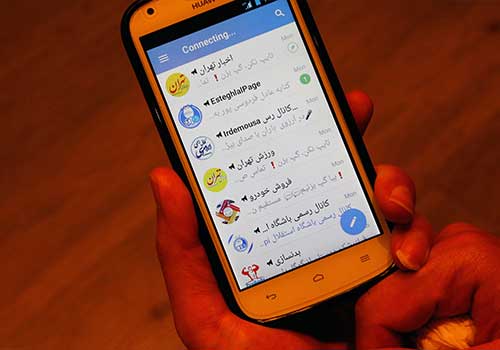

Today, I had no time for tea and toast, my usual morning routine. I had an early meeting with a group of women and men wholeheartedly devoted to social change. In my city, these volunteers are supporting government-run orphanages for young children and toddlers, often with disabilities. They are making a heroic effort, as these kids are living under horrendous conditions. And it was not until later in the day that I had time to flip through blogs and news feeds. I was struck by the number of articles covering the death of Mahsa Amini. And even more so, by the strength and resilience the Iranian protesters – largely led by women – are showing. So far, one can feel change is in the air.
New media key in the fight for social change
Despite the aggressions that the Iranian security forces are demonstrating, both in the streets and online, more and more people are raising their voices against the regime. Individuals, academics, artists, activists, and even hacker groups, and internet companies are supporting online resistance in various ways. As my fellow student ‘Silvia’ argues, new media allows all actors in society, from individuals to activists and politicians, to directly exchange information and opinions with each other. Consequently, one could claim that digital platforms and social media have become pivotal in the fight for social change, counting on women’s rights and increased gender equality.
However, as digital spaces are closed down in Iran, how do you deal with an anti-feminist regime that blocks internet access in your country? How do you side-step censorship? Well, it is possible as internet companies are encouraging individuals and activists to use so-called proxy servers to keep digital spaces open. This means that we can still follow the developments in the streets, see the brutal violence inflicted on the protestors by the police, and read and listen to individuals’ testimonies. Digital and social media are an undeniably important tools for coordinating the protests, sharing news and evidence about the events, and putting pressure on the Iranian regime. Today’s protesters are indeed tech-savvy.
The digital world is male-dominated
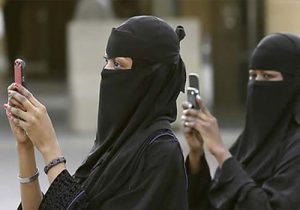
What is also significantly different this time around in Iran, compared to the protests in Tahrir Square in 2011, is the role taken by young women and girls. But, despite the present role new media play, do women have access to digital and social media? I would argue that the existing inclusion gap relating to access to digital platforms is a gender gap. According to the global organisation GSMA, representing the mobile ecosystem, women around the world are less likely than men to own a mobile phone. Across low- and middle-income countries, today, women are 16 percent less likely than men to use mobile internet, compared with 15 percent in 2020. The gender gap is the widest in Sub-Saharan Africa and South Asia. In addition, in this context, it is essential to focus on how women get access to and use digital and social media – if they create opportunities for them, or if they are used for greater control of their freedom. So, when talking about inequality within the digital world, notions such as agency and ability could be added to the ICT4D goals: access, affordability, availability, and awareness.
Consequently, do you think it could be possible to achieve sustainable social change and justice without digital gender equality? How should young female activists in Iran make the best use of new media in the fight for social change, women’s rights, and gender equality? Let us know!
Finally, I would like to challenge my fellow volunteer friends to use digital and social media to raise awareness of the mistreatment of children in orphanages in my own city. See you next time.

