
Access to reliable and timely information is vital for development, especially in emergency situations when a rapid response to a crisis is required. Accurate information can help a team of responders meet the immediate needs of the people impacted, in the most effective way possible.
The free flow of information, and exchanges of ideologies, are also important for citizens and society to grow, learn, build, and thrive. Today, the internet and various social media platforms play a key role in making information available to most people, providing new and exciting means of sharing ideas, creating opportunities, and building new networks across the world.
For example, the transnational exchanges of ideologies and the globalization of the world have contributed to the acceptance of the Universal Declaration of Human Rights, and today, the internet makes this information readily available to people in restrictive societies, enabling them to fight for their rights.
However, the internet also contributes to the dissemination of ‘fake news’ and false information that can be equally damaging, as well as providing a means for authoritarian governments to censor and control the flow of information. New media and technologies are therefore tools that can be used for the benefit as well as detriment of society.
Controlling the Narrative
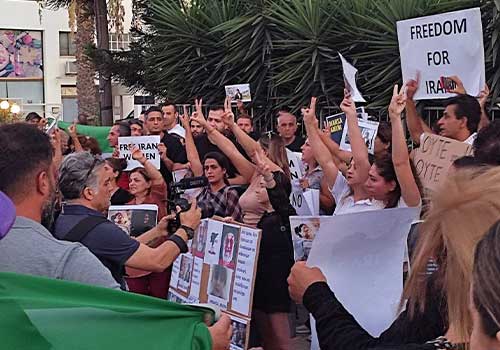
During the ongoing protests in Iran, following the death of Mahsa Amini in police custody in September this year, the Iranian authorities repeatedly attempted to control the narrative around events through media, and by restricting people’s access to the internet.
It was only when the public responded with outrage to the news of Mahsa’s death that authorities released security footage of Mahsa collapsing in the detention centre, claiming she had a heart attack.
The public was quick to note that there is no security footage available of Mahsa’s arrest and her transportation to the detention centre and that the security footage provided only showed the few seconds leading up to her collapse. The fact that the majority of women in Iran have been arbitrarily detained by the morality police, and have experienced harsh treatment for themselves, also most likely impacted the way the public interpreted events.
To me, this highlights the following points:
- The public needs to be informed of events to be able to hold governments accountable
- Media can be doctored or framed to control the narrative
- People need to critically consider and evaluate the reliability of media
- Prior experiences and knowledge will impact the way people interpret information
- It is vital that people hold authorities accountable for their actions
- The public needs platforms on which they can challenge authorities, raise questions and make their experiences/opinions known
Citizen Journalism
The opinion on citizen journalism is divided. Many journalists and academics “hail citizen journalism as a more transparent and democratic form of journalism”, while others are more sceptical and do not see citizen journalism as having to do anything with journalism[1].
However, information recorded and disseminated by civilians can prove to be essential when ‘traditional’ journalism is not possible. In Iran, over 40 journalists have been arrested since the protests broke out and many others have been forced into hiding. The arrests, threats, and internet blocks are being used to intimidate journalists and restrict their abilities to freely report on events and communicate developments to the public.
Under these circumstances, civilian journalism can bridge the gap by informing the public.
https://www.youtube.com/watch?v=g-kqWhEH6XI
[1] https://www.opensocietyfoundations.org/uploads/ce357846-eecf-4114-a3e4-500ce863fbe6/mapping-digital-media-citizen-journalism-and-internet-20110712.pdf p.6

