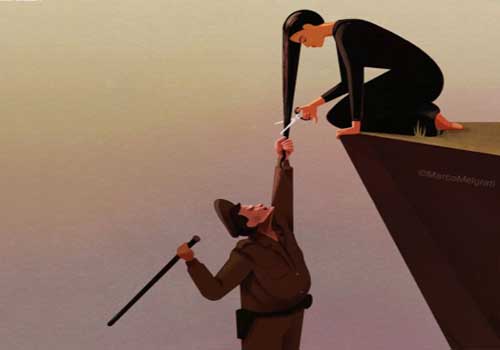

Over the past four, or so weeks, Iranians have taken to the streets to demonstrate their anger over the death of 22-year-old Mahsa Amini while in the custody of Tehran’s violent morality police. In the streets and online, protesters are continuing to call for the fall of the regime. On social media, supporters are especially vocal; as a challenge, women are cutting off their hair, while using the hashtag #HairForFreedom.
Why is hair a powerful symbol?
Whereas an old culture and mourning tradition in Iran, it has now become a mark of the right to be an independent human being. Hair has always been a strong symbol, across time and cultures. Just think about your own culture, how men and women in your country have followed repressive culture or religious beliefs, or pop culture, or beauty standards, by wearing their hair straight, short, or long, or covering it up. Therefore, haircutting is a revolt; telling us that the regime in Iran cannot control these women.
What are your views on online celebrity involvement?
As my fellow student ‘Silvia’ discusses, celebrities on social media have been posting statements in solidarity with the people in Iran. For example, French actresses Marion Cotillard and Juliette Binoche are high-profile celebrities to join the cut-your-hair movement. This is a strong sign of support for the women’s rights protests in Iran. And, mega-famous Oprah Winfrey, with an extensive group of followers, is using her YouTube channel to show her support for the Iranian protesters. But, this is also an effective way of getting attention. So, even if celebrity involvement raises awareness about the situation in Iran, is there a risk that famous people may deflect the spotlight from where it belongs? What are your thoughts on this?
Not only celebrities cut their hair
Swedish MEP (Member of the European Parliament) Abir Al Sahlani, cut her hair during a European Parliament debate in protest of the Iranian regime. In this video interview, she tells Times Radio that without her cutting her hair, the EU resolution that was adopted the day after she cut her hair would have been watered down. She also claims that the UN should ‘protect civilians from oppressors’.
Consequently, hair is a strong political statement. But, how do you feel about celebrities and politicians being praised for cutting off their hair on their social media and digital platforms, while there are no consequences for them doing so? Is this act of solidarity, helping or harming the Iranian cause? Stay tuned.//Ruth

