
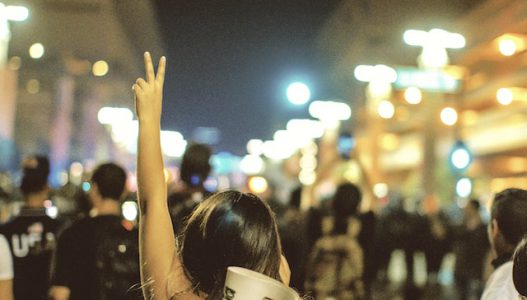

It is safe to say that the technological evolution of the internet and its possibilities has led it to become a natural part of our way of communicating, understanding the world and sharing ideas. Technology alters the landscape in which human social interaction takes place and shifts the power and leverage between actors (Tufekci, 2017, p 124). The contemporary digital technologies allow users to have a voice where earlier it was reserved for the elites (Tufekci, 2017, p 122). Digital technologies such as social media make it possible to avoid censorship. For example, when broadcast channels will not highlight a certain issue or event, social media can be a great platform for the stories that are not being told.
Social change in the middle east
During the Arab spring (17th Dec 2010-2012) social media platforms such as Twitter and Facebook were rolled out in several countries in the middle east. The platforms were used to connect and share ideas and discussions. It was also on these platforms that the news of the protests spread and gained momentum. In Egypt, the organizing and activism online was crucial for the revolution. The government led by Hosni Mubarak had underestimated the power of social media and the internet; digital activism had been discarded as slacktivism with no real effect (Tufekci, 2017, p 16). This was proven wrong.
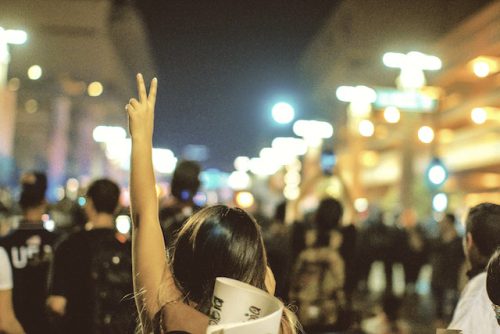
Egypt saw an extraordinary unification of its population under the parole that change was needed, which saw an end to 30 years of Mubarak ruling the country. Social media was a crucial part of the revolution. The images and stories posted by users were shared around the world and the cause of people in Egypt became known everywhere through activists’ mobile devices.
Mahsa Amini protests
Today, we see the same willpower in the people of Iran, where the demonstrations for the recognition of women’s rights in Iran have continued for over a month. The initial spark was the brutal killing of Mahsa Amini, a 20-year-old Iranian woman of Kurdish descent. Mahsas supposed crime was showing too much hair, which led her to be arrested by the Iranian moral police. The tragic story of Mahsa led to demonstrations against the regime from many parts of society and they are continuing.

The last month, Iran has been trending on Twitter. Demonstrations to support and amplify the important issues of violence against women and women’s rights have taken place all around the world. How the situation will develop is impossible to say, the success of the protests can be measured in achieving the expressed aims, but the protests can also be ends as well as means (Tufekci, 2017, p 89). Tufekci (2017, p. 91) states that setting up libraries is amongst the first objectives when organizing a protest. Using ICT to spread stories can also be seen as the extent of the physical libraries on site. The contextualization and understanding of the cause is crucial not only for the protesters participating physically, but also for people abroad that wish to understand and support the cause.
Globally, support has been shown for the cause of Iranian women by sharing their stories and keeping the issue alive. These acts of collective action through social media, in solidarity with demonstrations, have spread worldwide. The vitality of the protests has also spread to popular culture. Recently a world renowned pop band Coldplay showed their support to the demonstrations (dailymail.co.uk, 2022) during a concert in Buenos Aires, Argentina. They invited a Persian singer to sing along what has become an anthem for the movement in Iran, Baraye (read more about the song in this post). These acts spread awareness and solidarity for the cause of the Iranian women and people. Recently, CNN wrote about the possibility of Starlink satellite internet providers to be positioned over Iran (CNN.com, 2022). The solidarity showed to the movement through ICT should not be underestimated.
Jin, Jyan, Azadi – women, life, freedom
Recently we did an interesting podcast interview with an Iranian living abroad (if you haven’t listened to it, I recommend it!) In the interview we got an insight into how the latest protests differ from earlier ones, the momentum of the combined efforts to make the voices of Iranian women heard and the underlying struggle of not only Iranian women in general, but more specific Kurdish women and the striving for Jin, Jyan, Azadi, the current slogan for the demonstrations. The podcast guest expressed the importance of these words that are translated to woman, life, freedom, relating to the struggle for equality by Kurdish women. In the early 2000’s, the words were coined by Kurdish women as part of the PKK, being the only Kurdish political movement making the liberation of women equally important to the national cause (www.progressive.international, 2022).
This time the movement is leaderless – we are all leaders! – Iranian student ((Jin, Jyan, Azadi – podcast).
”What is the biggest change in these recent demonstrations in Iran, compared to earlier ones?” We asked in the podcast. The answer was: ¨this time, the movement doesn’t have a leader, we are all leaders”. The protests in Iran are decentralized and the demonstrations belong to all women, all are affected, and all have a say in the matters of their rights. However, navigating through the digital space is dangerous in Iran. The podcast guest informed us of the internet being shut down in the country at the moment. However, there are still possibilities to access social media platforms and the internet in general through VPN-tunnels. However, accessing the internet through VPN-tunnels might pose a risk, since there is a possibility of the government potentially tracing activists. Added to that is the risk of communicating on a social media platform, either with your own identity or anonymously.
Risks of using social media
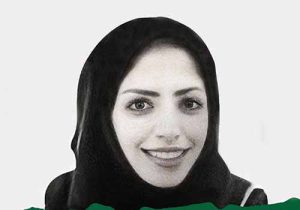 In the article Digital empowerment – but for whom? there is an emphasis on the importance of using the social media platforms while being aware of the risks in forms of surveillance and repercussions by governments. There have been cases where, particularly women using social media has led to serious consequences, such as in the case of Salma Al-Shahab. The use of ICT and in this case, Twitter, is a hot topic. What is done to protect users from harassment and how can the integrity of users be protected?
With ownership of Twitter, Elon Musk will have access to all Twitter feeds and user data. Given his prior use of Twitter tends to impact the value of his business holdings, there is concern that he could hand over select user data to governments in countries with fewer privacy concerns he seeks to do business in. It is a privacy nightmare (www.apc.org, 2022)
On 28th October 2022, Elon Musk closed the deal on Twitter, buying the company for 44 billion dollars and taking it private. This can potentially mean that the world’s richest man also has the power to make changes to Twitter which might not be in the interest of users, especially regarding marginalized groups in the global south. Concerns regarding this topic are discussed by individuals living in the global south, calling it ”a potential nightmare” (www.apc.org, 2022).
As in the case of Salma Al Shahab, Saudi Arabia is active in identifying and silencing dissidents and critics of the country through social media platforms such as Twitter (www.theguardian.com, 2022). In regards to the current Elon Musk affair, there is a threat to users from Saudi Arabia that the government might gain access to data since one of the owners of Twitter since 2011, Prince Alaweed bin Talal, still has a stake in Twitter. The holder of al-Talal’s shares is his company Kingdom Holding, of which the Saudi Arabian sovereign fund (chaired by MBS) recently bought a stake. This leads to the pressing issue of how users are going to be protected and how to safeguard human rights on Twitter.
Gender matters also in ICT
Women in the global south belong to the most marginalized groups on the planet, and most likely are the last group to be able to harness the opportunities of ICT (O’donnell & Sweetman, 2018). The gender gap regarding users
of the internet and social media is increasing in the Arab world, Asia Pacific and Africa (www.itu.foleon, 2022). Also, women are 10% less likely than men to own a mobile device. In some areas of the world, such as southeast Asia, the likelihood is 26% compared to men (O’donnell & Sweetman, 2018). On top of that, they are 70% less likely to go online (ibid.). This potentially risks obstructing women in their efforts to make their voices heard and benefit from using ICTs.
Male dominance in ICT
The majority of the largest ICT companies are US based, which affects the way ICT are facilitated and how they develop (O’donnell & Sweetman, 2018). Also, careers in tech are dominated by men, and so are the roles in new technologies (ibid.). This leads to content, applications and tools tailored for men. Potentially, this has an effect on how women can make use of ICT in a way that suits their needs. In regard to social media, women are an especially vulnerable group. Women face a higher risk of experiencing violence online, but the likelihood of reporting is lower (ibid.). Globally, the prevalence of online and ICT facilitated violence against women and girls ranges from 16% to 58% (UNWomen, 2022). All this combined with the gender gap makes the internet and ICT a rather hostile place towards women. It also leads to the question of what more can be done to include, protect and secure the rights of women in the digital space.
Conclusions
Where the protests in Iran will end we do not know, even if we can undoubtedly say that ICT makes a difference. The amplifying effect of ICT can support movements with support in many ways and create awareness and solidarity around the globe. However, the safeguarding of women in the digital space is an issue that needs to be addressed. Musk’s recent Twitter overtake and the apparent violations of human rights in the example shown by Saudi Arabia is enough to question being a Twitter-user or not. Activism and women’s struggle for equality and human rights are fortunately not limited to Twitter, but the gender gap in parts of the world when it comes to using ICT needs to be addressed. Internet violence towards women and girls and the male-dominated ICT companies also need to be examined further.
Reflections
To summarize this exercise, it has been interesting to dive into how ICT and development can be used and in which ways. The topic we’ve chosen for the blog is women’s rights in the digital space, which for me has been enlightening. Some parts are devastating, but it has also left me optimistic. The events in Iran have been hard not to incorporate, since it is a perfect example for the change that women can lead.
In recent weeks, there has been intense work with creating the blog together with creative and driven group members while simultaneously creating articles and content. The use of the blog might have been useful as a pedagogical tool during a larger part of this program, instead of only a short course, and it would have been interesting to further investigate the theories and literature regarding ICT.
Since most of us if not all, are professionals of some kind, members of the group choose parts that we feel confident in producing in an effective manner to meet the deadlines. With more time, it would have been possible to gain some new technical insights in managing the blog in a manner that is more inclusive and manageable for the whole group.
The most interesting part of this assignment was meeting the Iranian student who we made a podcast with. It was very interesting to hear the optimistic viewpoints and the strength of Iranian women during these troubling times. It also shed light on the topic of privacy online, which I think we all too often pay way too little attention.
References
Association for progressive communications (July 2022). Civil society sounds alarm: Twitter acquisition would be a “potential privacy nightmare”. Downloaded November 3, 2022.
CNN. Bertrand, N & Marquart, A. (October 2022). CNN Exclusive: After Ukraine, Biden administration turns to Musk’s satellite internet for Iran. Downloaded October 29, 2022.
Daily Mail. Powell, M. (October 2022). Coldplay perform Iranian protest song – that’s been BANNED by the Islamic Republic – during their sell-out Buenos Aires show in support for protesters. Downloaded November 1 2022).
International Telecommunication Union (ITU) (2022). The digital gender gap is growing fast in developing countries. Downloaded: November 1, 2022.
URL: https://itu.foleon.com/itu/measuring-digital-development/gender-gap
O’Donnell, A & Sweetman, C. (2018). Introduction: Gender, development and ICTs. Gender & Development. 26:2, pp. 217-229.
URL: https://doi.org/10.1080/13552074.2018.1489952
Progressive International. Bodete, M. (October 2022). “Jin, jiyan, azadi” is not a hashtag. Downloaded October 30, 2022.
URL: https://progressive.international/wire/2022-10-14-jin-jiyan-azadi-is-not-a-hashtag/en
The Guardian. Kirchgaessner, S. (November 2022). Alarm on Capitol Hill over Saudi investment in Twitter. Downloaded November 4, 2022.
Tufekci, Z. (2017). Twitter and Tear Gas – The Power and Fragility of Networked Protest. New Haven, CT: Yale University Press.
UN Women (October 2022). Accelerating efforts to tackle online and technology facilitated violence against women and girls. Downloaded November 4, 2022.

