


Over the past weeks, you have followed and hopefully enjoyed our blog ActDigital and our posts about the possibilities, challenges and risks that an increasing use of digital and new media creates for activists in general and social movements. In particular, we have focused on feminist activists and their pursuit of women’s rights and gender equality. I have come to believe that new media and digital platforms can serve female activists well in their fight for civil rights, justice and social change.
As most of us know today, activists use a mix of traditional and digital means to protest. Traditional activism is moving away from public spaces to digital platforms, as the number of people with access to digital technology grows. Feminism, which I see as a form of activism, also benefits from new media. It is a powerful tool in the hands of women to express their views and mobilize support for social change. So, even if we, at large, still have much more adjustments to do in order to attain gender equality in our societies, I believe digital platforms are important tools in this struggle. Therefore, more research and facts are needed so that women can take advantage of the potential of new media and digital platforms.
As a protest, female Iranian activists cut their hair and burn their hijabs on Twitter
In Iran, the recent death of 22-year-old Mahsa Amini has fueled the biggest protests seen for years in the country (Guardian, 2022). My fellow students and I have written about this over the past weeks. Now the women-led demonstrations have entered their eight week. After Masha Amini’s arrest and death, for allegedly breaching Iran’s strict dress code for women, young female activists have led the charge by removing their headscarves. The protests really took off in response to women posting images on digital platforms of themselves cutting their hair, as well as videos trending on Twitter of women burning their hijabs. However, the regime is not silent, it is cracking down on protesters and activists in the streets and online. The Iranian police is arresting them and shutting down their access to the internet, in the hope that digital platforms will become an ineffective tool for organizing and coordinating mass protests (Guardian, 2022).
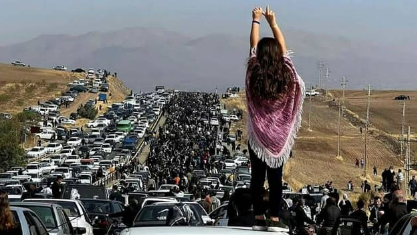
Still, we cannot deny the role new media and digital platforms have played during the ongoing Iranian uprising. Most of us can agree that activists benefits from new media, as it is a very powerful tool in the hands of protestors. Activists can express their views, make their voices heard, and mobilize public opinion. But, the use of new media and digital technology does not only enable activists to mobilize support for specific social issues. As Pepper and Jackman (2019, pp.29, 31) claim, for ordinary people digital platforms are also powerful means to stay in touch, share thoughts and ideas, as well as to contact and inform each other about possible employment opportunities and admittance to education. Consequently, digital technology is not just a decisive tool in the struggle for equality and social change, but, as Anwar and Graham (2020, p.241) argue, it also has a real impact on poverty reduction, as it creates new networks and generates new employment opportunities, especially in low and middle income countries.
New media is still skewed in favor of the well connected
On the other hand, Unwin (2017, p.1), as well as Deichmann and Mishar (2019, p.23), claim that instead of lifting people out of poverty, digital technology has increased global inequality. They argue that like previous technological innovations, social media and digital platforms “tend to be productivity biased, skill biased, and voice biased” (Deichmann and Mishar, 2019, pp. 21-22). Thus, digital tools tend to be skewed in favor of the already successful, talented, and well-connected population. So, these tools are life changing for those who have access to new media, can afford the technology and know how to use it. But, as Unwin (2019) rightly states, “the enormous potential that such technologies can enable also means that those who do not have access to them are left relatively more disadvantaged than they were previously” (p.43). So, new media and digital platforms risk amplifying existing inequalities. Therefore, since it is difficult to know how much new digital technologies have, or have not, contributed to poverty reduction, Pepper and Jackman (2019, p.31) ask for more research about the relationship between digital platforms and development. According to them, more facts could entail better informed policy decisions and help guide allocation of monetary, human and technical resources.
Even though it is difficult to determine the benefits that new digital technologies generate, especially among more marginalized groups of people, we can agree that digital platforms are an integral part of most societies today. New media has become accessible to almost anyone regardless of his or her social, economic or educational background. Even governments have learned to navigate and control the digital public space. Now and again, regimes spread misinformation and distractions, and introduce different forms of censorship, which make it difficult for ordinary people to sort facts from fiction and truth from hoaxes. According to Tufekci (2017) this has to do with the chaotic nature of internet, which “can asymmetrically empower governments by allowing them to develop new forms of censorship based not on blocking information, but on making available information unusable” (p. xxix). Since this behavior is more obvious among authoritarian regimes compared to democratic regimes, the use of digital platforms is an exceptionally brave act in many countries. In Iran, for example, the regime has a powerful and extensive digital security service.
Digital tools are widespread and fundamental to activism and social movements
In this regard, the ongoing revolt in Iran is a reminder of the protests and rallies on Tahrir Square in Egypt in 2011. These countries are known for their extreme acts of violence against their people and thanks to new media, Egyptian activists were able to overcome censorship and organize protests in 2011. According to Tufekci (2017, p. xxiii), Egyptian protesters could use digital platforms to encourage resistance in ways that would have seemed impossible to earlier activists. As we all know, much has happened since then. New technologies have shifted activism from the streets to digital platforms that can be used to mobilize people against repression and inequalities. Consequently, as digital platforms bridge distance and geography, they create digital spaces where local issues become global concerns and local activists connect with global citizens. Therefore, digital tools are now widespread and fundamental to activism and social movements. In addition, as we have seen over the past weeks, they do play a role in Iran. We can follow the developments in the streets, see the brutal violence inflicted on the protesters by the police, read and listen to individuals’ testimonies and interviews with Iranian women on a daily basis. As an example, Masha Amini’s name has reportedly become the most used hashtag in the world in the last six months. So, even if digital spaces are closed down by the Iranian regime, the ongoing women-led protests are reaching media, journalists, peers and audiences beyond the country’s borders.
As we are all aware now, the role taken by young women and girls is significantly different this time around in Iran. For example, compared to previous protests in the country as well as the protests on Tahrir Square in 2011. Women play a noticeable part on digital platforms. But, even if women are at the forefront of the Iranian protests, men are also advocating for women’s freedom. Protesters include young schoolgirls without their hijabs and their parents and grandparents. They are all fighting for social and political change and freedom. But, if women play a prominent role during the current protests in Iran, what do they – like feminist activists around the Global South – need when it comes to access to new media?
Men dominate the digital space
In reality, women seem to have limited access to the internet. According to the GSM Association’s 2020 report Connected Women, women in low-income countries are 20 percent less likely to have access to the internet (Arora and Raman, 2022, p.304). Since men dominate the digital space, it could become a barrier for women to empower themselves. Therefore, it is essential to focus on how women get access to digital platforms. Do digital tools create opportunities for women, or are they used to control their freedom? For example, Arora and Raman (2022, pp.304, 314) emphasize that women may have to share their phones with their family members and that in some cases they may even have to ask for permission from a husband, father, and brother to use social media platforms. Phones with tracking and location sharing devices create opportunities to control women’s mobility. Some women, in some cultural contexts, may also pay a high price for openly expressing themselves, since their activism may be judged against their families’ reputation. Against this background, I would argue that there is a real gender gap in the access to digital platforms. But women are not the only group that is marginalized in this space. Likewise, children that live on the streets of major cities also fail to benefit from the digital tools that are often available in schools. Therefore, to achieve sustainable social change and justice we need to deal with digital gender, social, political and economic inequalities. These inequalities “imply that digital solutions to poverty reduction must be much more subtle and sophisticated than just ensuring that everywhere has connectivity at a reasonably affordable price” (Unwin, 2019, p.43).
The key is to make new media affordable and accessible to women
Still, when it comes to women’s activism, digital tools and new media have the potential to support women’s empowerment, as they allow women to connect and communicate across physical and social boundaries. Just as in contemporary Iran, new media may mobilize and inspire women to participate in rallies in the fight for social change, equality and justice. Moving forward, I therefore believe it is key to make digital technology affordable and accessible to women and increase women’s media literacy. There is also a need for more focus on how women use new media, and how men may prevent them exercising transformative agency at household level by controlling women’s use of digital platforms. For this reason, O’Donnell and Sweetman (2018, p.220) underscore that when talking about women within the digital context, notions such as agency and ability should be added to the ICT4D-goals: access, affordability, availability and awareness.
As we have discussed, new media and digital platforms can support women’s empowerment. But, as McCarrick and Kleine (2019) conclude this is only possible if women are allowed access to: “connecting and communicating across physical and social boundaries, receiving information from diverse sources, crafting new identities for themselves, starting to question and challenge the environments they live in, as well as improving access to health information, online learning, remittances and financial services, government services and information, and business opportunities” (p.103).
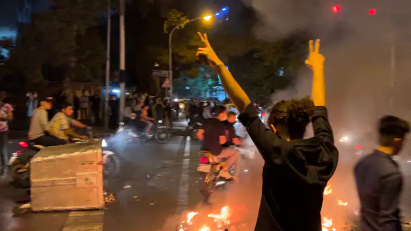 In Iran, the protests are still ongoing. As we follow the developments, it is obvious that new media and digital platforms allow protesters to be heard and seen. Their voices are not silenced, even as the clampdown continues on and off the streets of Iran. In the hands of female activists, online materials, such as hashtags, viral song and memes, create magic by empowering Iran’s protesters. #womanlifefreedom stands for change.
Thank you!
We will soon be closing down our blog ActDigital. We are a group of students pursuing a Master’s program at Malmö University and we have been running this blog as part of an assignment on a NMICT&D course. I hope you have enjoyed reading our blog posts and that we have made a positive contribution to the world of communications and social change. I also hope that you will keep the discussions about new media and activism alive and share your reflections, experiences, ideas, and questions with other feminist activists. Thank you!//Ruth
—
References
Anwar, M. A., & Graham, M. (2020). Between a rock and a hard place: Freedom, flexibility, precarity and vulnerability in the gig economy in Africa. Competition & Change: Online First.
Arora, P., & Raman, U. (2022) Fair Work, Feminist Design, and Women’s Labor Collectives. In Graham, M. & Ferrari, F. (Eds.). Digital Work in the Planetary Market. (pp. 303-318). Cambridge, MA: MIT Press.
Deichmann, U., & Mishar, D. (2019). Marginal Benefits at the Global Margins: The Unfulfilled Potential of Digital Technologies. In Graham, M. (Eds.). Digital Economies at Global Margins. (pp. 21-24). Ottawa, ON/Boston, MA: IDRC/MIT Press.
The Guardian (2022, September). Martin Chulov: Mahsa Amini’s brutal death may be moment of reckoning for Iran. September 20, 2022 from Mahsa Amini’s brutal death may be moment of reckoning for Iran | Iran | The Guardian
The Guardian (2022, September). Weronika Strzyżyńska and agencies: Iran blocks capital’s internet access as Amini protests grow. September 22, 2022 from Iran blocks capital’s internet access as Amini protests grow | Iran | The Guardian
McCarrick, H., & Kleine, D. (2019). Digital Inclusion, Female Entrepreneurship, and the Production of Neoliberal Subjects – Views from Chile and Tanzania. In Graham, M. (Eds.). Digital Economies at Global Margins. (pp. 103-127). Ottawa, ON/Boston, MA: IDRC/MIT Press.
O’Donnell, A., & Sweetman, C. (2018). Introduction: Gender, development and ICTs. Gender & Development, 26:2, pp. 217-229. Available on: https://doi.org/10.1080/13552074.2018.1489952
Pepper, R., & Jackman, M. (2019). A Data-Driven Approach to Closing the Internet Inclusion Gap. In Graham, M. (Eds.). Digital Economies at Global Margins. (pp. 29-32). Ottawa, ON/Boston, MA: IDRC/MIT Press.
Tufekci, Z. (2017). Twitter and Tear Gas-The Power and Fragility of Networked Protest. New Haven, CT: Yale University Press.
Unwin, T. (2019). Digital Economies at Global Margins: A Warning from the Dark Side. In Graham, M. (Eds.). Digital Economies at Global Margins. (pp. 43-46). Ottawa, ON/Boston, MA: IDRC/MIT Press.
Unwin, T. (2017). Reclaiming Information & Communication Technologies for Development. Oxford: Oxford University Press.

