
In theory, social media allows everyone (with access to the internet and the right kind of device) a platform to make their voice heard by anyone, anywhere.
This creates amazing opportunities for activists who want to get their message heard and their cause known by many people. For women and other marginalized gender groups who tend to be underrepresented in organized politics and might lack the power and connections needed to achieve legislative change (or are too disillusioned with and discriminated by the system to work within it), social media can provide useful tools.
What we are currently seeing in Iran, and my fellow student ‘Ruth’ has reflected on before is how women living in a patriarchal oppressive regime are using social media both to facilitate protests inside Iran and raise awareness of their struggles beyond its borders.
It’s difficult to imagine that in an old media world the murder of one woman in an authoritarian state would have become global news. How would we all have known if it wasn’t for the brave Iranians who knew her, saw what happened to her, and told us on social media?
The same inequalities are present on- and offline
While social media is arguably lowering the barrier to being heard for many people it is by no means leveling the playing field. Just like in the ‘real world’ white, wealthy people have the most power and the biggest platforms. Public people, celebrities, sports stars, and world leaders have the biggest presence on social media platforms like Twitter and Instagram.
The power of a large existing platform when pursuing activism becomes clear when looking at the reach of the ‘#MeToo movement’. Originally an idea in 2006 by Tarana Burke, an activist, and survivor of sexual abuse working with young people affected by similar traumas. But turned viral (and is still used) as a Twitter trend started by the actor Alyssa Milano who shared her sexual abuse experience while calling for others to join her.
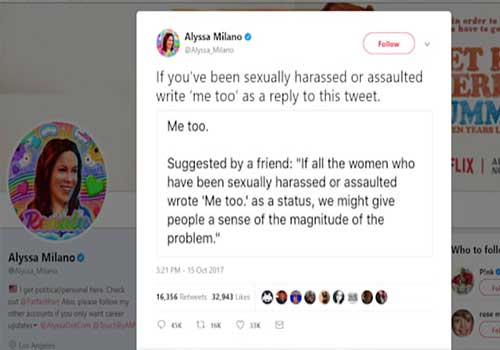
Alyssa Milano as a mainstream celebrity, with a large social media following and relationships with other Hollywood celebrities, was able to spark an international campaign that from conversations I had at the time with people of all genders close to me changed perceptions of and responses to learning about sexual abuse and harassment.
Alyssa Milano was not the first activist to take to Twitter to campaign against sexual harassment or violence or to share that she was a victim (or survivor). Comedian Margaret Cho’s campaign #12DaysOfRage from 2015 is another example.
And there will be many, many more examples of women speaking out about their experiences on social media that none of us have ever heard of.
Celebrities as amplifiers of marginalized voices
People with existing platforms, for reasons related to their careers outside activism, can make their voices heard louder online as well as offline. And many celebrities are using their platforms to amplify the voices of others.
Recently this has been the case in relation to the ongoing protests in Iran. Many celebrities I follow on social media have been posting statements in solidarity with the people fighting for their rights and freedom in Iran. Iranian official’s criticism of (and threats to?) Iranian celebrities suggest that the regime is also aware of the power famous spokespeople can have. As internet access in the country has been blocked by the regime calls for us outside Iran to continue shining a light on their struggle have been loud.
But for how long will celebrities without a connection to Iran be using their channels to focus on a conflict far away that doesn’t directly affect them? What happens when their efforts need to be focused on promoting a new film, advertising partnership, or another political issue they care about (or are expected to care about) comes to their attention?

